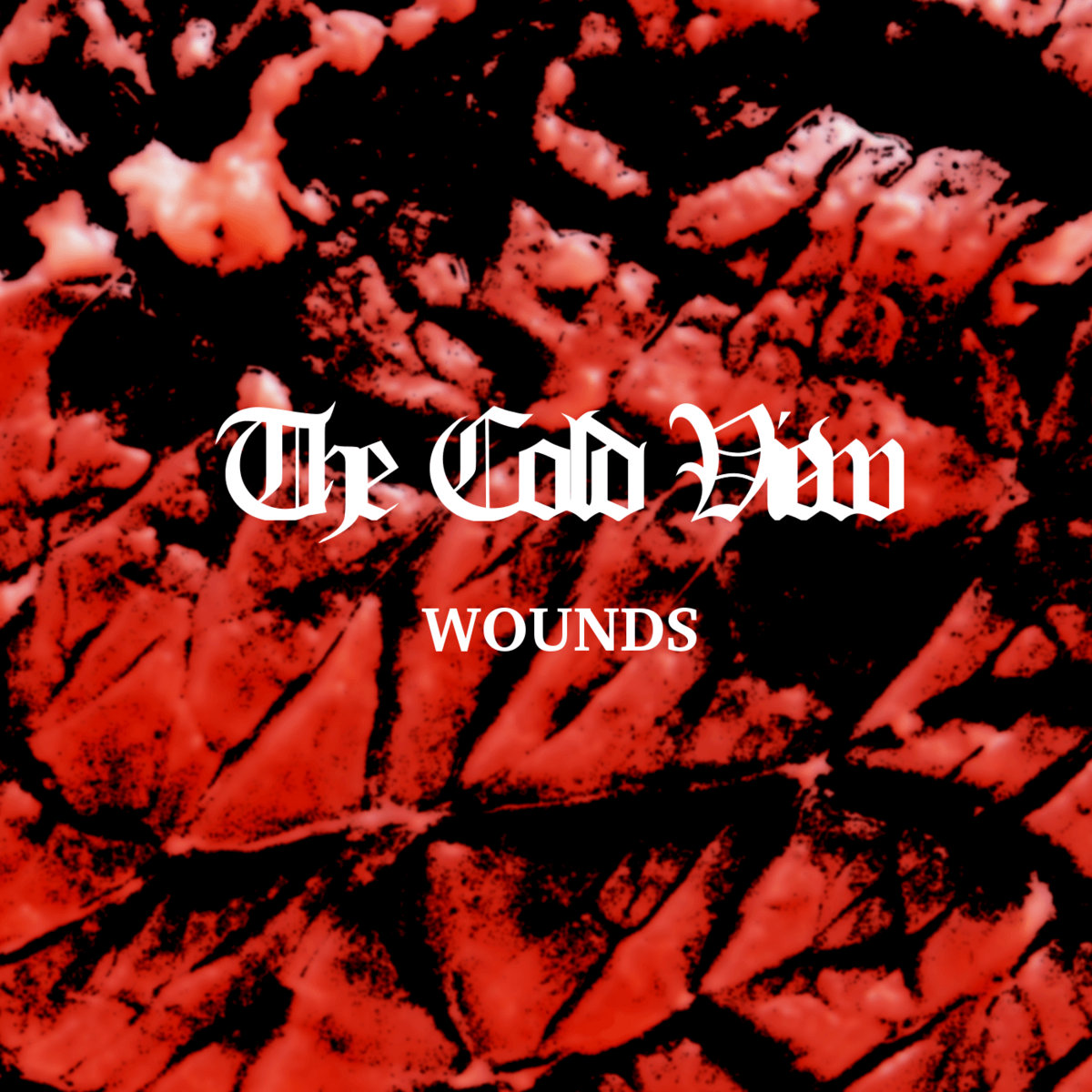
The German one-man project The Cold View, led by the individual behind the pseudonym AAS has made a profound impact on me in the realm of Funeral Doom over the past years. The person behind the project dissects and fillets Funeral Doom much like Bohren und der Club of Gore did with Dark Jazz up to their Geisterfaust album. Album by album, AAS peels back the layers of Funeral Doom, reducing it to a pale core—a half-existence, akin to the dormant state of an ungerminated seed.
In the Dust of This Planet
This reduction brings to mind some of Stijn van Cauter’s projects, particularly during the phase where van Cauter established himself as a force in Ambient Funeral Doom. The music created during this period closely parallels AAS’s sound. Albums like From Funeral Skies by The Ethereal and Desolate by Beyond Black Void come to mind as particularly relevant comparisons. However, on Wounds, The Cold View offers something with more grip, never losing its hypnotic strength, even as it traces the trajectory of reduction through previous releases. This musical deconstruction, culminating in Wounds, reflects the idea that humanity itself is an unfinished transitional state. In In the Dust of This Planet, Eugene Thacker argues that the world, at its core, is indifferent—neither made for humanity nor comprehensible to it. The Cold View adopts this notion with Nietzsche’s “cold gaze”, a way to see the entire reality without the bounds of education, socialization or any borders. The result is an acknowledgment of one’s own incompleteness (on earlier releases) and of the incompleteness of others (on Wounds).
Wounds – A Cry Amid the Machinery
The penultimate album, Wounds (released in 2017), represents the final membrane between Funeral Doom and Dark Ambient. Guitars are almost entirely absent; movement is scarce, light even more so. Instead, the listener is met with thin, apocalyptic keyboard fanfares, string-like keyboard sounds, and tinkling keys, accompanied by rhythmic, sampled industrial noises from the labor-slave worlds of past generations. These sounds form the backdrop to a cry against the storm of machines. Monotonous, frozen drum machine tracks and growling deathly breaths complete the sonic tapestry. If Wounds were edited as a soundtrack to Fritz Lang’s Metropolis, or vice versa, the match would be seamless.
The industrial aesthetic, with its artificially expressive fanfares, drums, and strings, heightens the impression of a post-human world rendered in sound—a reality overtaken by artificiality. The increasing dominance of machines and artificial structures erases anthropocentrism, replacing it with a cybernetic void. Wounds evokes this vision: a world where humanity exists only as a fading memory while mechanics take over. The artificial instrumentation is not merely a tool of expression; it symbolizes the post-human condition.(Nick Bostrom: Superintelligence) While AAS keeps the lyrics to Wounds under wraps, the music itself provides a perspective shaped by Nietzsche’s cold gaze. It reflects a lifeless global society functioning in a mechanical rhythm. C.G. Jung warned of this dehumanization in a technocratic society, where the individual becomes a mere functionary within a mechanized system. This mechanized existence, Jung argued, threatens to displace the soul of the individual, reducing society to a soulless collective. AAS seems to perceive this dystopia as the present and manifests it tonally: a world where humanity is replaced by artificiality and mechanics drain life of its essence.
Only guttural, cold growls accompany the listener through the darkest work created by The Cold View to date. The concept of Nietzsche’s cold gaze remains, but now it is turned not inward toward the self but outward toward humanity in a world stripped of its metaphysical foundations. What remains is the cold emptiness of a universe that leaves humanity to confront its own insignificance. “God is dead!”—Nietzsche’s famous declaration—reverberates through Wounds, whose chilling atmosphere embodies the silence of this death. The freezing, mechanical rhythms evoke the collapse of a post-human era. The album achieves a biting, cold, and atmospheric darkness that feels almost instinctively comprehensible even without words: this darkness is not merely atmospheric but existentially nihilistic and, at its core, deeply philosophical. It reveals the meaninglessness of existence “in a universe that is neither for us nor against us”.(Thomas Ligotti’s The Conspiracy Against the Human Race).
Conclusion: A Cybernetic Aesthetic
Occasionally, AAS offers his music for free on Bandcamp—another parallel to Stijn van Cauter’s earlier work—which makes it worth checking out for those curious. Albums like Wounds, the split with Abysmal Growls of Despair, and Born Banished Beaten Broken Buried are excellent starting points for anyone who doesn’t shy away from the thought of van Cauter circa 2002/2003. Minimalist to the core, with keyboards both dominant and conspicuously artificial, this music exudes a unique cybernetic character that some might mistakenly dismiss as cheap. However, the impression of “cheapness” is misleading—Wounds presents a carefully realized aesthetic that feels out of time and, in its cybernetic coldness, stages the transition to a post-human existence.